The transition from the dry period to the start of lactation places high demands on a dairy cow. The rumen has to get going and immediately process large amounts of feed. Avoid making rumen function even more difficult with mycotoxins and endotoxins. “UltraSorb provides effective protection at low cost,” says Peter van der Vegt, Global Lead Technical Service at Volac International.
‘UltraSorb quickly pays for itself’
A healthy rumen is the engine of a smooth transition. Give cows the best possible care and avoid all risks that may harm rumen health. “Mycotoxins are present in virtually every ration. Whether they pose a risk to animal health depends on the levels. So be cautious about feeding refusals to dry cows. Research shows that these often contain higher concentrations of mycotoxins,” says Van der Vegt.
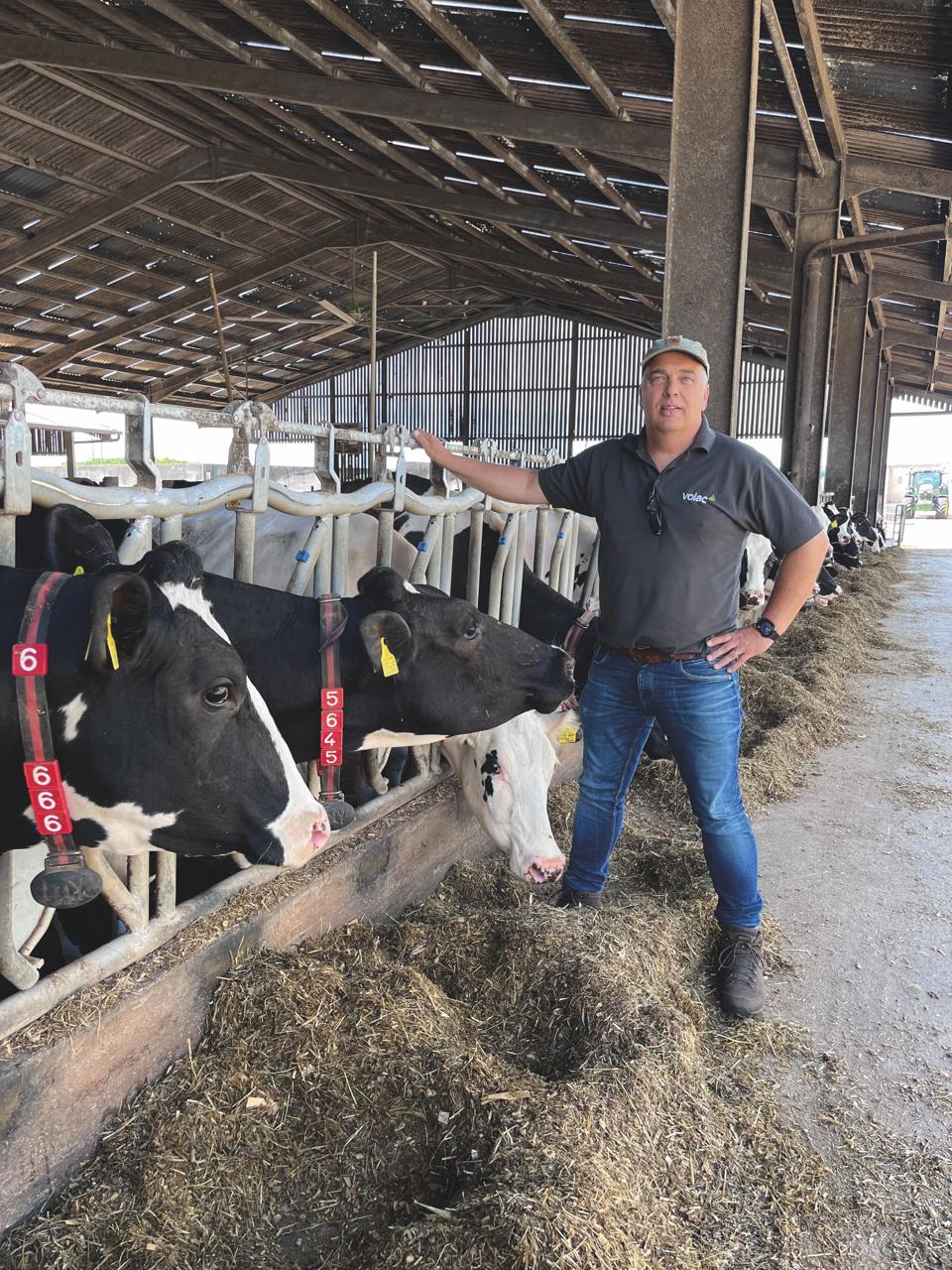
Toxins damage rumen health
DON (deoxynivalenol) and ZEN (zearalenone) are the mycotoxins most commonly found in feed. They disrupt rumen function and reduce dry matter intake - exactly what you want to avoid at this stage. Rumen acidosis, for example as a result of heat stress, can kill Gram-negative bacteria and release endotoxins. These toxins are a major cause of leaky gut and disrupted metabolism.
Bind and remove toxins
“The damage caused by toxins can be reduced by binding and breaking them down with UltraSorb R 3.0,” says Van der Vegt. It can easily be added to the ration. UltraSorb binds mycotoxins and endotoxins and converts them into safer, more manageable compounds. It neutralises contaminants into harmless by-products that the cow can safely eliminate from her body.
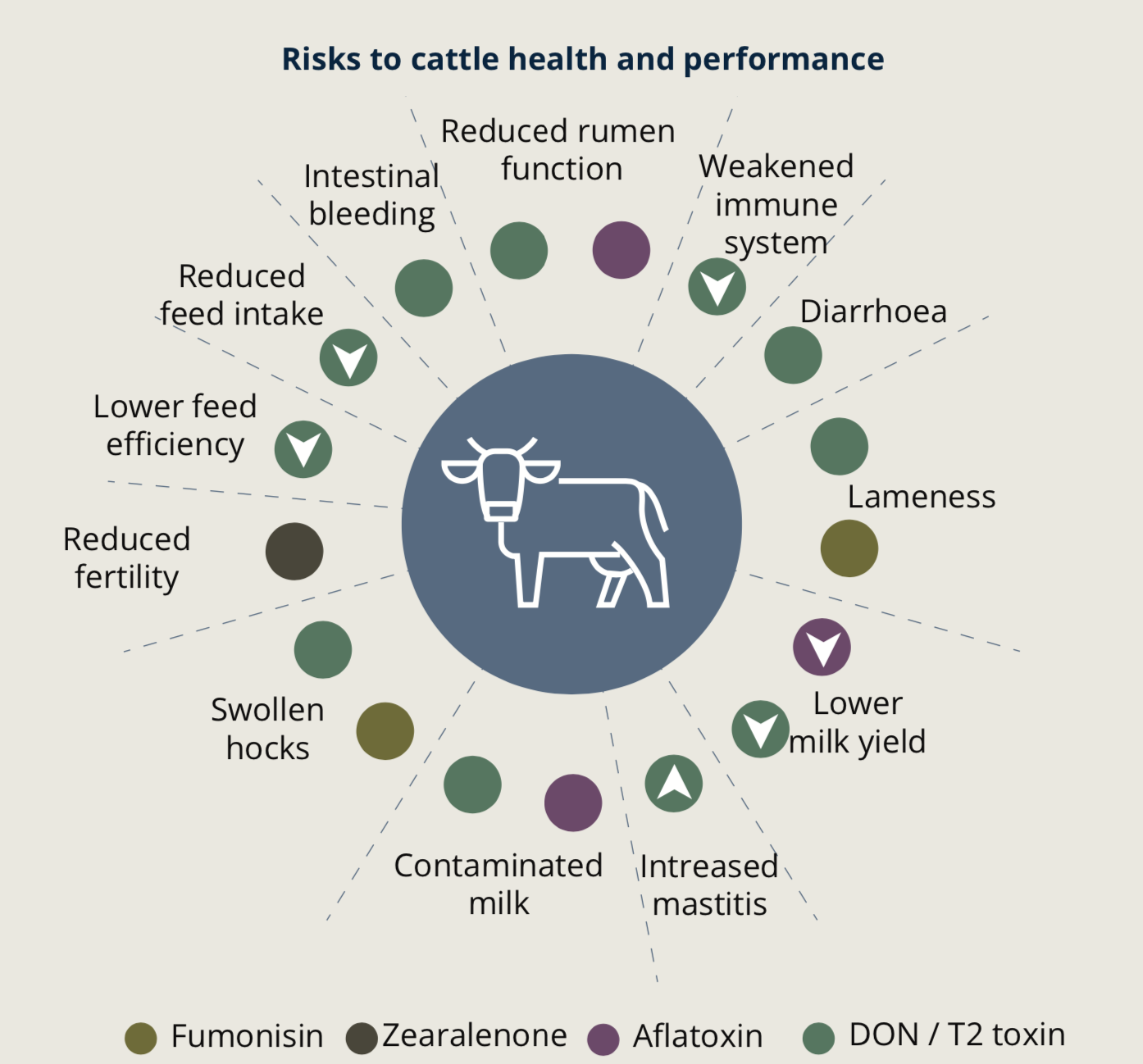
Transition places high demands on a cow
The transition period is extremely demanding for dairy cows. In a short time, the animals face many changes. Feed intake falls just as their requirement for energy, calcium and nutrients rises sharply. The cow also undergoes hormonal changes and encounters additional stressors, such as changes in ration and group, movements and hierarchy conflicts within the herd. A healthy cow can adapt to this, but when several challenges occur at the same time, the risk of health problems increases.
Simple and highly cost-effective
“It is easy to use by adding it to the mineral mix,” says Van der Vegt. “At just 10 grams per cow per day, it makes an immediate difference. The investment quickly pays for itself. I would add it to the ration as standard.”
Negative energy balance: add rumen-protected fat to the ration
In addition to limiting the burden from toxins, it is important to ensure the cow consumes enough energy after calving to reduce the negative energy balance. An easy way to do this is to feed rumen-protected fat. The energy density of fat is much higher than that of concentrate, without the risk of rumen acidosis. It is important, however, to choose the right fatty acid. In early lactation, a rumen-protected fat with a relatively high C18:1 content can help support energy balance, body condition and fertility. Later in lactation, a product with more palmitic acid, C16:0, can be useful to support milk and milk fat production. Farmers who work with production groups can choose two different fats. Farms without production groups are best advised to choose Megalac or Megalac 2.0 because these products contain both fatty acids.
Ready to protect your cows through the transition period?
Don’t let mycotoxins and endotoxins compromise rumen health, feed intake and performance. Talk to your Volac adviser today to find out how UltraSorb R 3.0 can be incorporated into your ration and help support healthy, productive cows from transition through lactation.
Contact your local Volac representative to discuss UltraSorb R 3.0 and find the right solution for your herd.